Replacement Engine or Engine Rebuild UK: Which Option Protects Your Car’s Resale Value?
The Short Answer
Neither replacement engines nor a professional engine rebuilding good 1 automatically destroys value or dramatically increases it. What protects value is documentation: an invoice with the engine number, a warranty certificate, and evidence of the parts and work. A warranty-backed replacement engine with paperwork sells faster and with less discount than a replacement without, and a rebuild that retains the original engine number carries a premium on certain cars.
How each route affects value
| Route | Effect on typical car | Effect on classic or rare car |
| Used engine + paperwork | Neutral | Slight negative |
| Reconditioned engine + paperwork | Slight positive | Neutral |
| Rebuild retaining engine number | Neutral | Positive |
| Any route without paperwork | Clear negative | Clear negative |
Why documentation matters more than route
Because it answers the buyer’s question. A buyer looking at a car with a replacement engine wants to know which used, rebuilt or reconditioned engine was fitted, when, by whom and under what warranty. An invoice and a warranty certificate answer all four. Without them, the buyer assumes risk and discounts accordingly, often by more than the work cost.
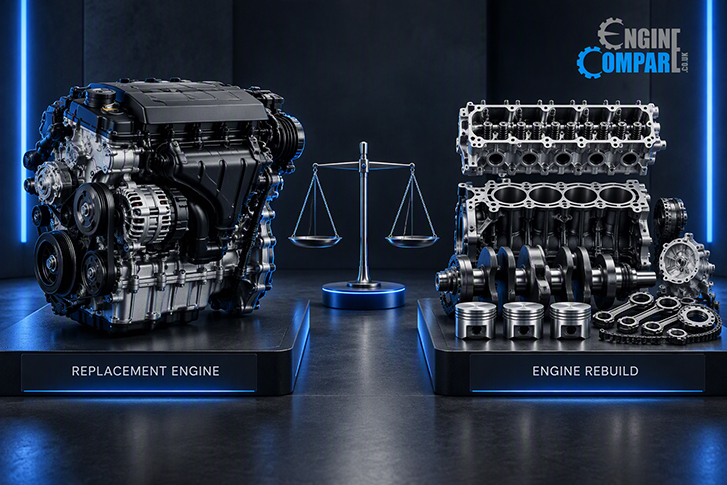
What should be in the file for resale?
- Invoice naming the engine code and engine number.
- Engine warranty certificate with cover dates and terms.
- Parts list, including timing components.
- Mileage recorded at the time of professional engine fitting.
- Details of any related work: cooling, injectors, turbo.
Does a rebuild add value on a classic?
On a matching-numbers classic, yes. Retaining the original block and crank matters to collectors and specialist buyers, and a documented original engine rebuild preserves that provenance. On an ordinary modern car, the premium is negligible, and most buyers simply want a warranty-backed reconditioned engine or replacement engine that works.
How do you present the work when selling?
Describe it plainly and attach the paperwork. State whether it was a used engine replacement, reconditioned engine or engine rebuild, the date, the mileage and the warranty position, and mention any related work. Buyers respond well to transparency, and an owner who can produce a folder of documents is treated very differently from one who says the engine was replaced “at some point”.
What reduces value fastest?
| Factor | Impact |
| No paperwork at all | Large discount |
| Mismatched engine number and documents | Large discount |
| Evidence of poor workmanship | Large discount |
| Unresolved faults after replacement | Large discount |
| Missing warranty certificate | Moderate discount |
How do you protect value during the job?
Ask for the invoice to be itemised, keep the warranty certificate, photograph the engine number on the vehicle and on the paperwork, and note the mileage at the fitting engine. That is thirty minutes of effort that pays back when protecting car resale value, and it costs nothing beyond attention.
What should a buyer check when viewing a car with a replacement engine?
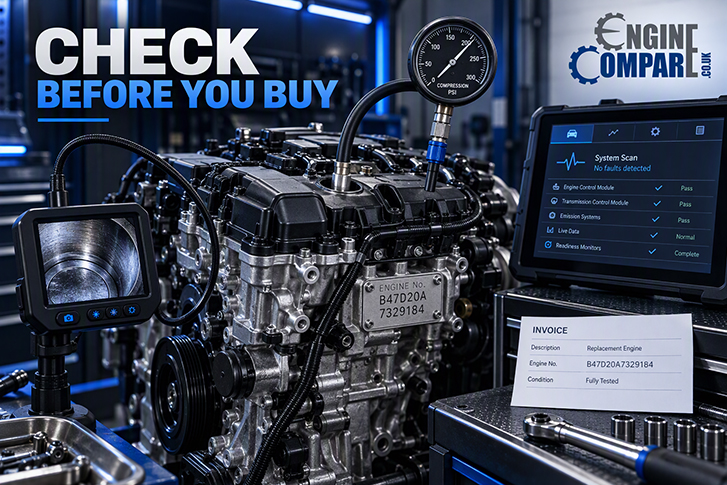
Check the engine number against the invoice, read the warranty terms, ask which engine specialist supplied and fitted it, and have a cold start witnessed. Then arrange an independent engine inspection, because documentation can be forged and an inspection cannot.
Frequently asked questions
Does a Replacement Engine Reduce a Car’s Resale Value?
Not inherently. Missing documentation reduces value far more than the engine replacement itself.
Is a Rebuilt Engine Better for Resale Than a Replacement Engine?
On a rare or classic car, yes, because the original engine number is retained. On an ordinary car, the difference is negligible.
What paperwork should I keep?
The itemized engine fitting invoice with the engine number, the engine warranty certificate, the parts list and the mileage at fitting, all in one folder.
Will Buyers Be Suspicious of a Replacement Engine?
Some will, which is why documents matter. A complete file removes the suspicion; an incomplete one confirms it.
Should I mention the replacement in the advert?
Yes, with the details. Transparency attracts serious buyers and avoids wasted viewings.
How do you document the work if the garage is careless with paperwork?
Ask for an itemised invoice and, if it is vague, request a written summary on letterhead before you pay the balance. Most reputable engine specialists and engine fitting services will oblige, and a short paragraph naming the engine number, the parts fitted and the warranty terms is enough to protect value at resale, even without a glossy certificate.
What is the one-line answer on resale and engine work?
Documentation decides value, not the route; an invoice, a parts list and a warranty certificate turn a replacement engine from a worry into a selling point.
What does a future buyer actually look for?
Four things: who did the work, what was fitted, when it was done and what cover remains. A buyer who can see those answers stops treating the replacement engine as a risk and starts treating it as a benefit, particularly in cars where engine failure is a known weakness. That is why the folder matters more than the route.
How do you handle a car that has had two engine replacements?
Be transparent and be prepared for questions. Two replacements on one car suggest either a neglected vehicle or an engine supplier or fitting problem, and buyers will ask. If the second replacement was performed under warranty by a reputable UK engine specialist, say so clearly and show the paperwork; that context turns concerning history into a manageable one.
