Scrap or Repair? Ten Used Cars Where a Replacement Engine is Genuinely Worth Doing in 2026 and How the Math’s Works
How the Decision is Made
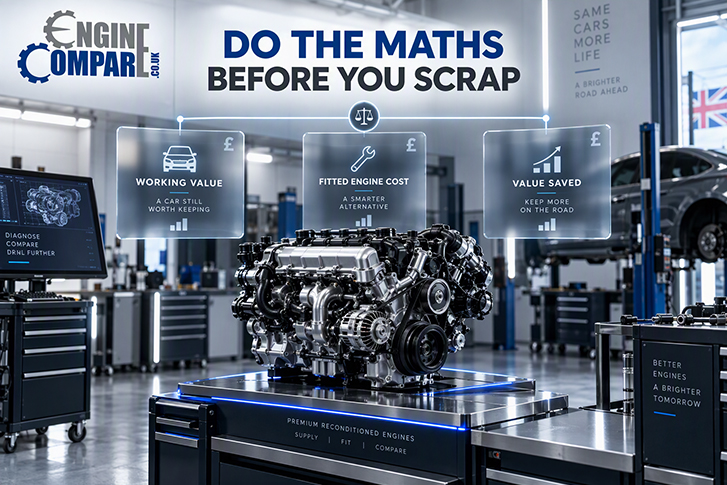
Three numbers: the car’s value in working order, the fitted Ford Transit replacement engine cost, and the car’s value as it stands with the fault disclosed. Repair the car if the repaired value exceeds the pre-fault value minus the repair cost plus a margin. On most of the cars below, choosing a replacement engine in the UK makes financial sense; on cheap, high-mileage examples it does not.
The Ten Cars, with Typical Figures
| Car | Working value | Recon engine fitted | Verdict |
| BMW 3-Series (Diesel) | £6,000–£12,000 | £3,800–£4,600 | Repair |
| Audi A4 (2.0 TDI) | £5,000–£11,000 | £2,600–£3,800 | Repair |
| VW Golf (2.0 TDI) | £4,500–£9,000 | £2,400–£3,600 | Repair |
| Ford Transit Custom | £8,000–£16,000 | £3,400–£4,200 | Repair |
| Mercedes Sprinter | £8,000–£18,000 | £4,200–£5,600 | Repair |
| Land Rover Discovery Sport | £12,000–£22,000 | £3,200–£5,500 | Repair |
| Nissan Navara | £9,000–£16,000 | £3,800–£5,400 | Repair |
| Toyota Hilux | £12,000–£22,000 | £3,600–£5,200 | Repair |
| Mercedes E-Class | £6,000–£15,000 | £3,400–£5,200 | Repair |
| Jaguar XE or XF | £8,000–£18,000 | £3,400–£5,600 | Repair |
Why these cars qualify
Because their working values are high enough that a warrantied reconditioned engine still leaves equity in the vehicle. On a car worth £4,000, a £3,800 engine leaves nothing; on a car worth £12,000, the same engine leaves £8,000 intact, and the owner keeps a documented, reliable vehicle after a professional engine replacement service.
When the maths flips
- Car worth under £4,000 with a £3,000+ engine bill.
- Structural corrosion or a failing gearbox alongside the engine fault.
- Two or more major systems failing together.
- Very high mileage with no service history.
- A model with poor resale values even in running order.
What should you check before committing?
- The car’s accurate working value from three sources.
- A written quote for the engine, including consumables.
- The condition of the gearbox, suspension and body.
- Whether the fault has a goodwill route with the manufacturer.
- The mileage and history you will present to a future buyer.
How do you protect the repair afterwards?
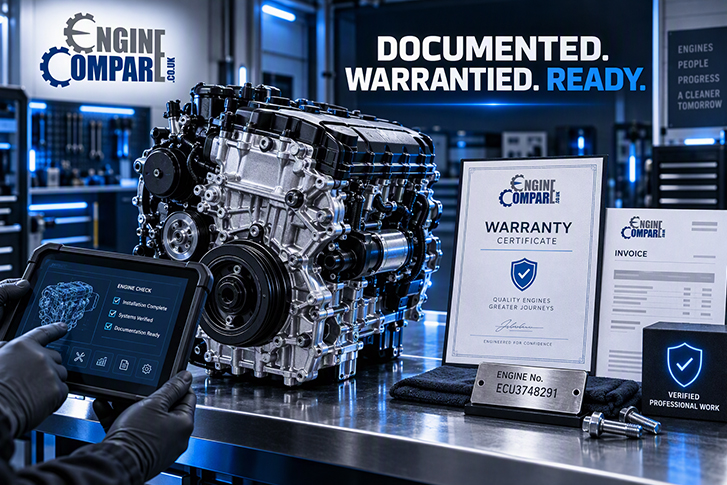
Keep the invoice, the warranty certificate and the engine number, service it at short intervals and treat the cause of the original failure seriously. On these cars, a documented replacement car engine is a selling point; an undocumented one is a question mark that costs money. Always confirm the terms of the engine warranty in the UK before approving the work.
What is the most common mistake?
Scrapping a car that had £8,000 in value because a £3,800 quote felt large at the time. Owners who compare the Land Rover engine replacement cost with the vehicle’s repaired value before reacting usually repair; owners who focus on the invoice number alone often sell a good car for a fraction of what it was worth.
Frequently asked questions
How do I value my car in working order?
Average three sources: an online valuation tool, local forecourt asking prices for the same year and mileage, and completed sale prices.
Is it always worth repairing a diesel?
Where the working value supports it, yes. Diesels hold value well, and a specialist can often supply a reconditioned diesel engine at a predictable fitted cost. The decision should still account for mileage, service history and the condition of the gearbox, turbo and emissions system.
What if the car is in finance?
Check the agreement before authorising work, and speak to the lender if the car is worth less than the settlement figure.
Does a replacement engine make a car harder to sell?
No, provided it is documented. Buyers fear unexplained engine work, not evidenced work. A properly invoiced used or reconditioned engine with a clear warranty can reassure buyers and protect the car’s resale value.
How long should I keep the car after a replacement?
At least two to three years to realise the value of the investment, unless circumstances change.
What is the one-line answer on repair versus scrap?
Run three numbers — working value, fitted engine replacement cost and current value with the fault disclosed — and choose car engine replacement whenever the vehicle keeps meaningful equity afterwards.
How do you present a repaired car to buyers?
Lead with the paperwork. State the replacement route, the date and the mileage, show the warranty certificate and mention any related work such as cooling, injectors or turbo. Serious buyers respond to detail, and a documented engine replacement with warranty removes the biggest objection they will have about a car of this type.
What should you do before scraping any car with a repairable engine?
Run the numbers twice and get a second quote from a reputable used engine replacement specialist. Owners who scrap cars frequently discover afterwards that a specialist would have quoted £800 less than the figure they reacted to, and that the repaired car would have been worth several thousand pounds more than the scrap value they accepted. On any car above £6,000 in working order, it is worth thirty minutes of arithmetic before deciding between engine repair or replacement and scrapping.
Which of the ten cars is the strongest case for repair?
Work vans, because downtime is measurable. A Ford Transit Custom or Sprinter earning money every day justifies a replacement van engine with warranty on the strength of uptime alone, and the resale value of a well-documented commercial vehicle is far better than most owners expect. Where a van is concerned, the arithmetic usually answers itself.
